Open Sculpture
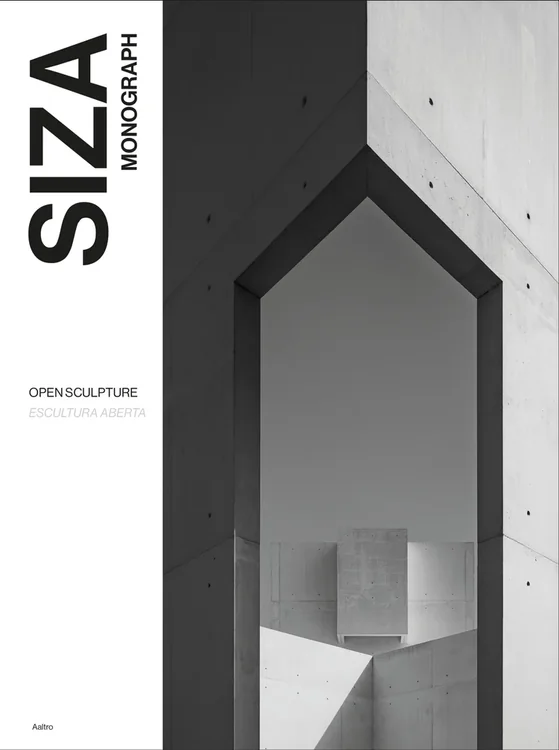
My first encounter with the Open Sculpture took place at a distance, from the balcony of the Leça do Balio Monastery. In the morning humidity, a white, almost ghostly presence emerged — suspended between heaven and earth, a fragment of light trapped in the charged atmosphere.
Up close, the soft, diffused light cancelled the contrasts, fusing the sculpture with the space around it. Its contours lost their rigidity and became part of the landscape, oscillating between presence and absence — a form in suspension, a dialogue between matter and emptiness.
By afternoon the scene had changed. The sun tore through a blue sky and the intense white came to life with every ray, its surfaces vibrant, reflecting light in an almost liquid form. The white was never simply white: it was a mirror of the weather, a body absorbing and reflecting the day.
Inside, the atmosphere changes completely. External noise is lost to the surrounding geometry and a dense silence takes over. Light is no longer just light — it becomes matter, entering in precise beams that shape the darkness. The sculpture is not a static object, but a living work that changes at every moment.